
Mike Roderick
My Journey:
After graduating from Purdue University with a BS in Electrical Engineering, I went to work at the DuPont Engineering Physics Laboratory in Delaware. While designing custom instrumentation and control systems for DuPont plants for 6 years, I also earned a master’s degree in electrical engineering at the University of Pennsylvania.
At that point, I wanted to learn more about control systems, but I didn’t want to spend another 6 years at night school. I was thinking, if I could just take 2 years off and go to school full time, I could learn about control systems and come back to DuPont. I took a leave of absence from DuPont to attend Stanford University full time where I earned Stanford’s Engineer degree, a postgraduate degree positioned between a master’s and PhD.
My supervisor at DuPont had my best interest at heart and he told me before I left DuPont to return to school “You would be crazy not to interview other companies after you get your degree.” I took his advice and interviewed other companies. TRW, an aerospace company in Redondo Beach, California had some very interesting satellite work, and their staff was very friendly, so I decided to accept their job offer.
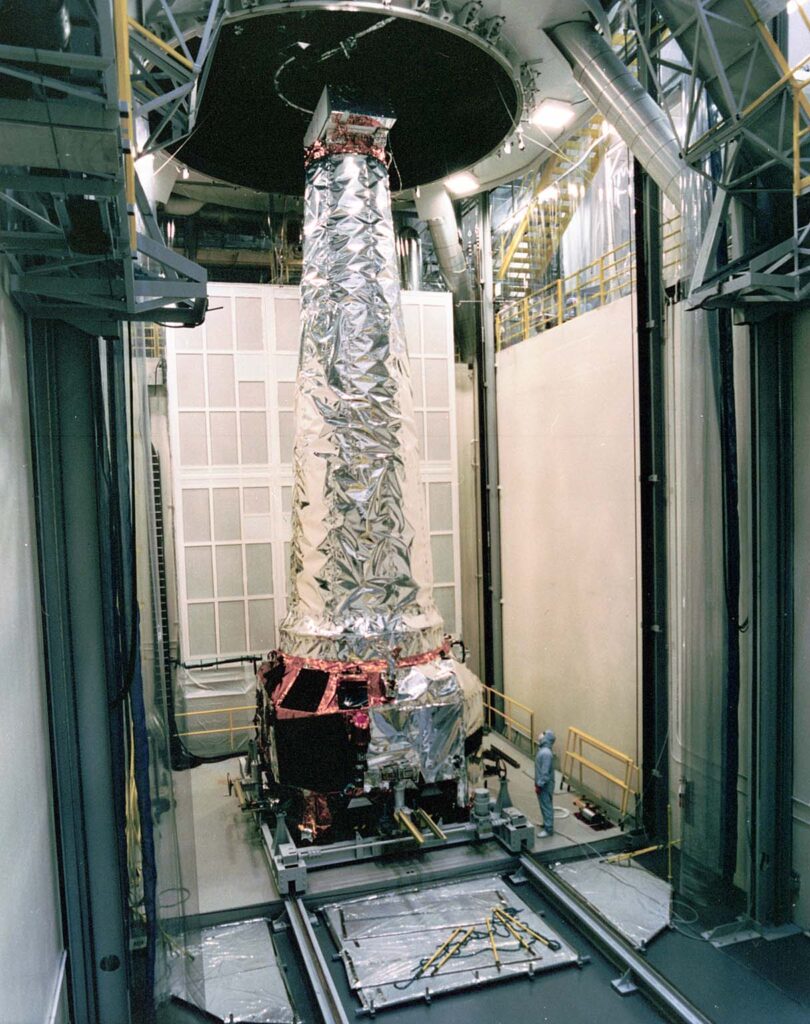
My TRW Years:
My 26-year career at TRW was intense and exciting. I programmed a computer to control a large laser beam. Then I designed electronics that flew on a variety of satellites. I became the head of a design department of 55 people. Finally, I worked on a number of satellite programs as a subproject manager. I focused on the computer, command and telemetry subsystems during a satellite’s design, fabrication and testing phases. I retired from TRW just before it was acquired by Northrop Grumman.
Chandra Observatory:
My favorite satellite program, the NASA Chandra X-ray Observatory, came near the end of my career. Let me take you with me on my personal journey as I began working with an international team of thousands of people who were all focused on Chandra’s development, launch, operation and finally the analysis of the Chandra Observatory data. I worked on Chandra during its initial design phase through its initial orbit operation phase.
<<< Note: See all image credits below.
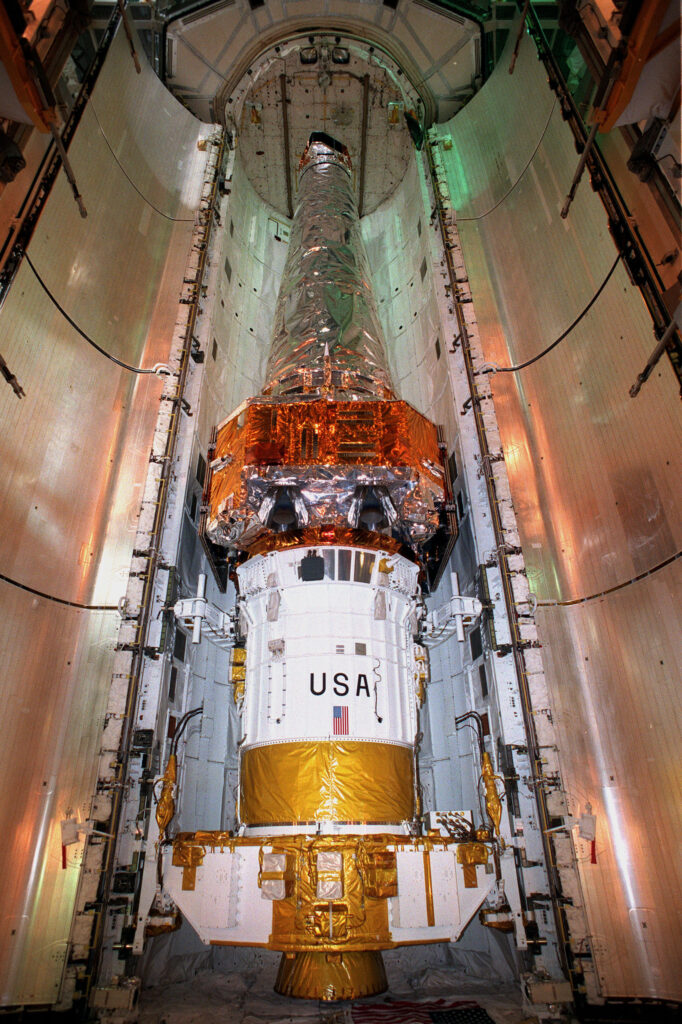
Why X-rays Matter:
Chandra was designed to view images created by X-rays because X-rays are emitted by the hottest, most energetic, and often the most mysterious phenomena in the cosmos. Some of the most violent events in the universe emit X-rays. Since X-rays are completely blocked by our atmosphere, viewing X-rays can only be done from space. Chandra’s optics were designed to resolve details 50 times sharper than previous missions.
My Chandra Experience:
I applied to work on Chandra as a design engineer in Chandra’s Command, Control and Data Management (CCDM) subsystem, but in the initial interview, the manager suggested that I instead manage the CCDM subsystem. I was both enthused and intimidated by the new assignment because I could sense that Chandra was going to be a huge endeavor, but back then, I still had no idea how large and important the Chandra Observatory program was going to become.
The subsystem included Chandra’s main computer and the command and telemetry functions on the spacecraft. The electronics for this subsystem were designed by teams within TRW and by outside subcontractors. After a proposal process, where outside subcontractors were selected, we began the design process with periodic detailed reviews for NASA.
I had worked on other NASA programs, but the Marshall Space Flight Center (MSFC) personnel who managed the Chandra program were exceptionally positive and helpful. At the beginning of the program, one of the engineers from Marshall announced, as a joke, “We’re from the government and we’re here to help!” But it wasn’t a joke. Instead of just managing, they actually blended in with us, working elbow to elbow, to complete the program, especially during the launch phase.
My recollection is that our initial design was for a 5-year Chandra lifetime on-orbit. Midway through the design process, we were asked to upgrade our design to a minimum 10-year lifetime. I’m so glad we did.
With its Inertial Upper Stage rocket, Chandra was going to be the heaviest payload ever launched by a space shuttle. Towards the end of the testing phase of the program while Chandra was still at TRW, there was an all hands meeting of approximately 250 people where I was surprised to receive NASA’s Silver Snoopy award along with 12 other people for work contributing to astronaut safety. My wife Mary was secretly invited to attend the meeting along with the other 12 spouses. My wife came early because she was on crutches at the time, and she was delighted to end up in a makeshift green room for 30 minutes before the meeting with just her, the project manager and astronaut shuttle pilot Jeff Ashby who had secretly come to TRW to distribute the awards. She really enjoyed her 30-minute conversation with Jeff Ashby and she was impressed by how cool he was before he was about to address the meeting of 250 people. She suggested that they give all 13 awards to me, which they didn’t.
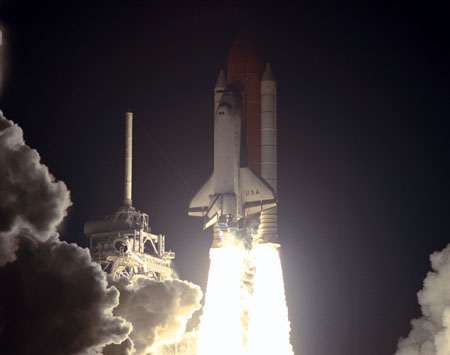
Chandra Launch Team:
After the design, fabrication, assembly and test phases were nearing completion and manpower requirements were tapering down, I began working on a different NASA program which was just beginning. Then NASA requested that I come back and join the Chandra launch team in Boston. I had never been on a launch team, so that sounded like it would be a new and exciting experience. I was able to take a temporary six-month leave from my new assignment so that I could join the Chandra launch team.
The launch team preparation took about six months and culminated with the launch and our early control and deployment of Chandra. It was serious business at this point because there were no “retakes” for many of the deployment operations. They had to be right the first time.
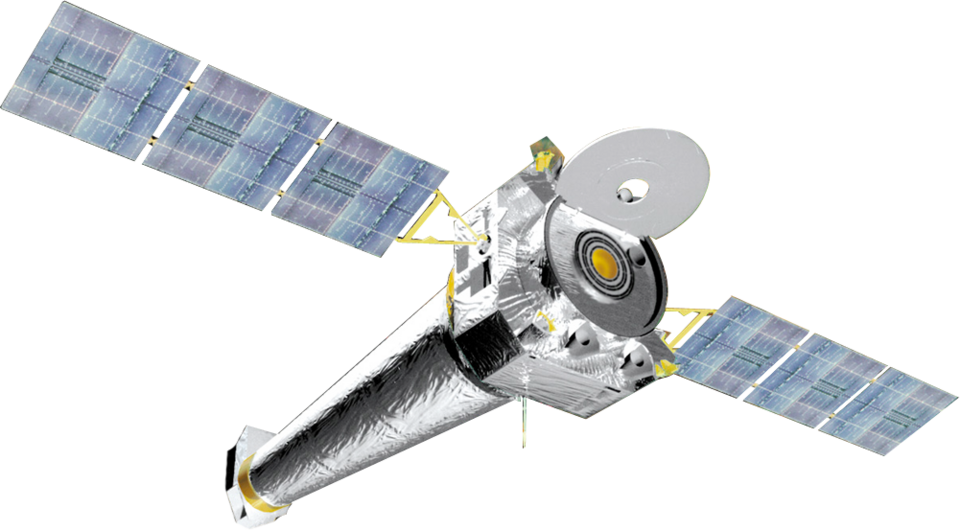
My Peak Moments:
Aside from the moment when I watched a NASA TV monitor showing Chandra blast into the sky aboard the space shuttle, my personal most intense moment came in the middle of the night of the Chandra launch. Chandra had been launched in the space shuttle at 12:30 AM and now it was time to wake up Chandra and run some tests while Chandra was still in the shuttle bay. I had managed the CCDM subsystem, but now, as a member of the launch team, I had been asked to design a long sequence of commands to be transmitted to Chandra on-orbit to test the CCDM subsystem. Most of the CCDM designers were now off the program, and I was now working at a level of detail that I had never been exposed to earlier as a manager.
I spent several weeks preparing the sequence and I was extra cautious because we were now going to test Chandra in the shuttle with astronauts on board. During that launch night, I gave my sequence to the controller who transmitted the sequence to Chandra. I was nervous because if anything went wrong, there would be very little time to make corrections before Chandra would have to be deployed from the shuttle. As it turned out, the sequence worked perfectly and all the CCDM equipment came alive and worked as designed. Only then did I begin to breathe again
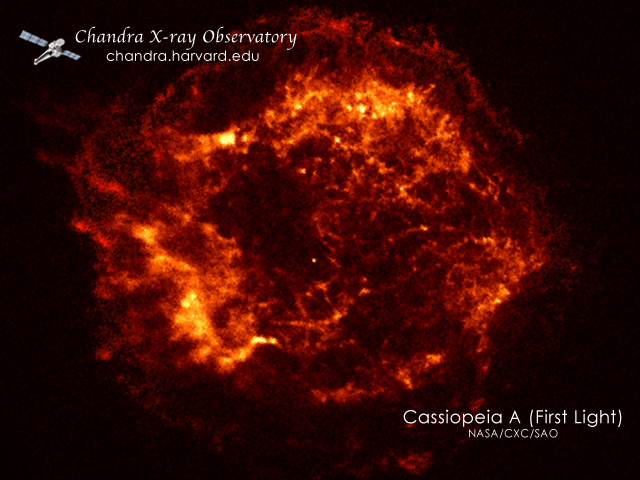
I remember another peak moment that launch night when I was able to walk into a side room in the launch center where I looked over the shoulders of a crowd looking at a monitor and heard the term “First Light” for the first time. Chandra was beginning to detect signals from space with its massive sunshade telescope door still closed.
Three weeks later, on August 26, 1999, when the sunshade door was opened, Chandra captured its official First Light image: the supernova remnant Cassiopeia A that is approximately 11,000 light-years away. (See Cassiopeia A First Light image on this page.) The image shows the remains of a supernova that exploded about 350 years ago. That image marked the beginning of Chandra’s extraordinary scientific journey
Handover to SAO Team:
After our launch team successfully deployed and began operating Chandra, we turned Chandra over to the Smithsonian Astrophysical Observatory (SAO) team of Chandra operators and scientists. That team has gone on to explore black holes and many other astronomical events. Those operations are continuing to this day. Chandra has far exceeded our 10-year design lifetime goal and has now surpassed 25 years of operation.
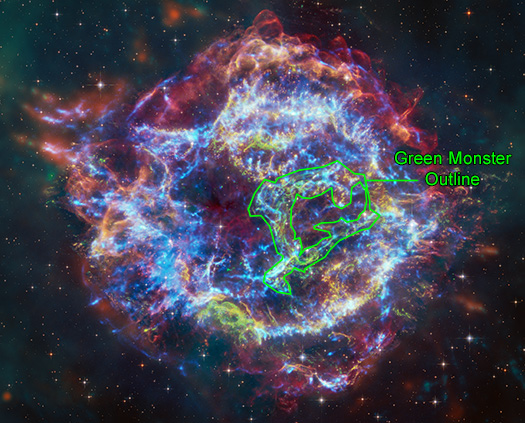
Chandra’s work continues to this day. In a very interesting image released on January 8, 2024, a composite image of Cassiopeia A was generated from data collected from Chandra, the James Webb Space Telescope, the Hubble Telescope and the Spitzer Space Telescope. (See Cassiopeia A composite image on this page.) An excellent description of the collaboration involved and of the image generated is given in this link: chandra.harvard.edu
It was an honor to be a member of the international Chandra team: a collaboration that has used the Chandra Observatory to expand our understanding of the universe well beyond our solar system.
The credits for the above images are given below. I appreciate the fact that these images are publicly available and I have been careful to give the correct credit for each image.
Image 1: Chandra Thermal Vacuum Test at TRW
Credit: NASA/Marshall Space Flight Center/TRW
Image 2: Chandra in Shuttle Bay
Credit: NASA/CXC/SAO
Image 3: Launch of Chandra aboard Space Shuttle Columbia (STS-93)
Credit: NASA/CXC/SAO
Image 4: Model of Chandra On-Orbit
Credit: NASA / Public Domain
Image 5: Chandra X-ray Observatory On-Orbit
Credit: NASA/CXC/SAO
Image 6: Chandra’s First Light X-ray Image
Credit: NASA/CXC/SAO